
 Scripture Reference:
Genesis 4:1-16, 25
Suggested Theme: God loves when we serve Him wholeheartedly and with our best efforts.
Memory Verse: “In all the work you are doing, work the best you can. Work as if you were working for the Lord, not for men.” Colossians 3:23, ICB




Story Overview:
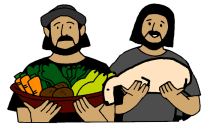
Two of Adam and Eve’s sons were Cain (a farmer) and Abel (a shepherd). Abel was faithful and offered the best meat from the best lamb in his flock to God as a sacrifice. Cain offered some produce from his crops as his offering to God. God was pleased with Abel’s sacrifice but not with Cain’s. This made Cain so angry that he killed his own brother, Abel. In punishment, God exiled (or banished) Cain from the area he knew as home.
Background Study:
Adam and Eve followed God’s instructions to multiply and fill the earth when first Cain and then Abel were born. Cain became a farmer, and Abel became a shepherd.
The name “Abel” means a breath, a sigh, or a trifle – almost nothing. We are not told why Eve chose that name, but possibly because she only had Abel a short time before he was killed. When they were grown, Abel was in the profession of raising sheep; Cain worked the soil.
We don’t know if God instructed Adam’s family to bring Him specific animal sacrifices, even though later (in Leviticus), certain types of sacrifices were specified. Both boys brought sacrifices to the Lord from the fruits of their labour, but Abel brought the best from his flock, and the Lord was pleased. It was “a better sacrifice” (Hebrews 11:4, ICB). The Genesis account is unclear as to why Cain’s faith and attitude displeased God. Cain presented some of the things that grew on his farm. It is not said that he loved God enough to give the first and the best, as Abel did. With Abel, God came first. He gave God the firstborn lambs and the best of his flock. The Lord accepted and welcomed this offering.
In Hebrews 11:4 we read, “ It was by faith that Abel offered God a better sacrifice than Cain did.” Abel believed and trusted God so fully that he was glad to give the best he had. Perhaps Cain brought his offering unwillingly because he thought he had to. Then he was angry and disappointed when he found God did not want that kind of worship.
Genesis 4:7 indicates that God gave Cain a second chance to obey. But instead of taking God’s advice, Cain became angry and murdered his brother. Cain was now openly rebellious.
When God asked Cain where Abel was, even though He knew the answer, God may have been giving Cain the opportunity to confess and repent. But Cain’s rebellion continued as he denied knowing where Abel was.
Anger should not be left to grow in our hearts because it allows the Devil to tempt us toward further sin. Later, in the New Testament, we will read about this.
When you are angry, do not sin. And do not go on being angry all day. Do not give the devil a way to defeat you. Ephesians 4:26-27, ICB
God pronounced a curse on Cain and his labours that caused Cain to express great anguish – but not repentance. Cain complained that his punishment was too much. The ground would not favour him with good crops, God would not look on him with favour, and anyone who saw him might kill him because he was a murderer. Even then, God showed His continuing love by placing a protective mark on Cain before he went out from the presence of the Lord and lived in a land called Nod (the land of wandering). Wandering about and unable to make a living from the ground, Cain would be a warning to others not to commit murder.



Way to Introduce the Story:
Collect pairs of objects of which one is new or in good shape, and the other is old or worn (one nice and one faded and torn shirt, one nice apple and one scarred or bruised one, (if you dare!) one clean sock and one dirty one, etc.) Show the first pair to the children. “If you were coming to my house to eat, which one of these apples would you like to eat? The nice one or the rotten one?” (Let the children answer.) “Why wouldn’t you want the rotten apple?” Now, use another pair of objects. “If you were going to wear your socks when someone very special walked by, which would you rather wear?” Go through each of the objects. “If we were to give something to God should it be second best or should it be the very best?” (Let children answer) “In today’s lesson, we are going to learn about two brothers who gave God gifts. Only one brother gave his very best.”
top
The Story:
After Adam and Eve were told to leave the Garden of Eden, they found a place to live where they could grow crops and raise animals. They had children. One son’s name was Cain, and the other was Abel.
When the brothers grew up, Cain became a farmer who worked in the fields. Abel took care of the sheep.
In those days, people devoted themselves to God by bringing gifts and laying them on an altar platform. Cain brought some of the vegetables that he had grown and placed them on the altar.
But Abel’s heart was different from Cain’s. He did not place just anything on the altar. Abel had faith, and he placed the very best of the best of his lambs and placed them on the altar.
God was pleased with Abel’s offering. Why do you think that was? Perhaps it was because he saw that Abel loved God so much that he wanted to give his very best.
God was not pleased with Cain’s offering. When Cain saw that God was more pleased with Abel, he became very angry. God saw Cain’s anger and said, “Cain, why are you so angry? If you do right, I’ll accept you. But if you don’t do right, you will sin.” God knew that if Cain did not stop being angry and jealous, he would do something terribly wrong.
When he heard this, Cain should have stopped and told God he was sorry, but he was so angry that he did not think about doing good things. He could not control his anger and only thought about how God approved of Abel more than he did.
Cain did not control his anger and jealousy. He became increasingly angry, and all his anger just “boiled up” inside.
Cain said to his brother Abel, “Let’s go out in the field.” While they were in the field, Cain attacked Abel and killed him.
When God came to Cain, He asked, “Where is your brother Abel?”
Cain answered, “Am I my brother’s keeper? Is it my job to keep track of him all the time?” Cain killed his brother when he thought no one was watching, but we know that God sees and knows everything that happens.
God knew what Cain had done and that Cain must be punished. “Your brother’s blood is still on the ground. Your punishment is that nothing you plant in the ground will grow. You will just wander around the earth, finding food wherever you can.”
Cain was upset by this. “My punishment is more than I can bear,” said Cain. “I will wander around and whoever finds me will kill me.” So God put a special mark on Cain so that anyone seeing the mark would be warned not to kill him. And then Cain went away from his family and his home.
After the sad story of Cain and Abel, Adam and Eve had another son, Seth.
Ways to Tell the Story:
This story can be told using a variety of methods. Always remain true to the facts found in the Bible but help children connect to its meaning by using drama, visual aids, voice inflection or other group participation.
Click here for visual aids and story-telling methods.
Click here to download the slideshow, or click here to download the pictures to print.
Each teacher is unique, so only use the illustrations that best relate to how YOU tell the story in THIS lesson. Too many illustrations can be confusing, so eliminate any that cover other stories or details you do not wish to emphasise in this lesson.
Review and Reflection Questions:
Review questions help children remember and know the facts of a story, while reflection questions encourage them to internalize its meaning and implications for their lives. Asking at least one of each type of question can help strengthen a child’s spiritual development and help them connect to God. Click here to learn more about review and reflection questions.
Review:
- What are the names of Adam and Eve’s first sons that are mentioned in the Bible? (Cain and Abel)
- What were Cain and Abel’s jobs? (Cain was a farmer, and Abel a shepherd)
- What does it mean to give God a sacrifice? (To give something valuable to God)
- What did Abel offer God as a sacrifice? (The firstborn of the flock- one of the lambs born first because they were the best ones)
- What did Cain offer to God? (Some of the fruit from his crops)
- Which brother gave his sacrifice because he had faith in God? (Abel)
- What did Cain do to Abel when God liked Abel’s sacrifice better? (Cain killed Abel)
- What was Cain’s punishment? (He had to leave his family and wander on the earth for the rest of his life)
- How did God still show His love for Cain? (He put a mark on Cain’s forehead, warning others not to kill him).
- What do you learn about God from this story?
- What do you learn about what pleases God from this story?
Reflection:
- What part of this story is the most interesting to you?
- What question do you have for God about this story?
- When do you feel angry?
- How do you think Adam and Eve felt when they realized Cain had killed his brother?
- How do you think God felt when He saw that Cain killed Abel?
- How would you feel if you were Cain, and the ground did not produce good food for you, and you had to wander around the earth?
Prayer:
It is important to guide children in learning how to pray. In prayer, children can connect with God and learn that He hears and answers them. God can become a life-long friend who is with them every moment of their lives. Try using a variety of prayer methods from time to time so that the children can learn to connect with God in different ways. Note that you can pray at any time throughout your lesson. A variety of prayer methods are found here.
Song Suggestions:
- I’ve Got Something in My Pocket Song
- Rejoice in the Lord Always Song
- I’m in the Lord’s Army Song
- Refer to the Song Page on this website for more options.
Activities and Crafts:
(How to choose the best learning activities for my teaching situation)
Activities:
- Half-fill one clear glass with water. Half-fill an identical clear glass with white vinegar. Tell the children that these glasses represent Cain and Abel’s hearts. (Point to the glass of water) Abel’s heart was good, and he wanted to give his best to God. (Put a drop or two of green food colouring in the vinegar glass and give it a stir.) The green glass represents Cain’s heart. He was jealous of his brother and didn’t give his best to God. Let’s see what happens to their hearts when they give gifts to God. Ask one child to put a teaspoon of baking soda in the glass of water (nothing will happen to the water). Abel gave his gift, and God was pleased. Abel felt good because he knew he had given his best. Now, let’s see what happened to Cain’s heart. (Have another child put a teaspoon of baking soda in the green vinegar glass). As the water bubbles and boils, talk about how jealousy made Cain’s heart upset and angry.
- Bring cleaning supplies and let the children clean the room where you meet. God gave us a wonderful place to study His word. Let’s do our best to keep it clean to show God we want to give our best.
- Decide on an item to bring next week to help in God’s work (a tin of food for the benevolence pantry, clothing for the needy, money for a benevolence project, stamps to help send correspondence courses, etc.)
- Guide the children in making a list of things they can do to help friends, parents, teachers, etc. Have each child choose a task and challenge them to complete it by the next time you meet.
- Discuss Cain’s anger and how we might relate to it.
- Draw a vertical line down the centre of a paper (or on a poster, chalkboard or whiteboard). At the top of the first column, write “Why was Cain angry?” Write “How did Cain deal with his anger?” at the top of the other. Talk about Cain’s choices.
- Now create a second chart. At the top of the first column, write “What makes me angry?” Write “how can I deal with this anger?” at the top of the other. Allow the children to list situations that trigger their anger and then discuss ways to deal with this. This might include deep breathing, pausing by counting to ten, praying, talking it through with the person or even removing themselves from the situation.
 Invite the children to respond to this story using the adaptable “God’s Story” printable reflection page. Free printables for this story.
Crafts:
- Make a bookmark using Ephesians 4:26-27.
- Print bookmarks, trading cards or timelines (printable pages).

- Visit the Teaching Ideas page for additional activities and crafts.
Other Online Resources:
- Colouring sheet and puzzle pages (Calvary Curriculum)
- Craft: Cain, the farmer, made from an empty toilet paper roll instructions (DLK)
- Printable pattern for toilet paper roll shepherd (DLTK)
- Other: Discussion questions and activities (Sunday School Lessons for Kids)
- Other: Good lesson plan, printable visuals, and activities (Bible Fun For Kids)
- Other: Another great theme for this lesson: anger management (Kids’ Health)
https://www.pinterest.com/marynnz/cain-and-abel/
top

©Mission Bible Class 2011-2025. Before copying or reproducing any portion of this website, please carefully read the “Copyrights and Permissions Page.” https://missionbibleclass.org/about/copyrights-and-permissions/ (Not to be sold or profited from in any way.) www.missionbibleclass.org